A Traumatic Brain Injury (TBI)—whether caused by a fall, a sports impact, or a road traffic accident—is a profound, sudden disruption to the central nervous system. Unlike progressive neurological conditions, a TBI introduces a dual challenge: addressing the immediate structural focal damage alongside diffuse axonal injury (the widespread shearing of the brain’s connecting nerve fibers).
The aftermath of a brain injury rarely presents as a single symptom. It is a complex tapestry of physical, sensory, and cognitive hurdles. Survivors often grapple with ataxia (loss of voluntary coordination), unpredictable muscle spasticity, vestibular spatial disorientation, and severe physical fatigue.
Navigating this complex territory requires far more than generic physical exercise. It demands highly targeted neurological physiotherapy that treats the brain and body as a unified, interconnected system. By leveraging neuroplasticity, specialized neuro-physiotherapy focuses on bypass-learning—helping the brain forge entirely new motor maps to retrain the physical self.
The Neuro-Dynamic Shift: Integrating Motor and Cognitive Recovery
Traditional orthopedic therapy focuses heavily on joint and muscle structures. In sharp contrast, TBI rehabilitation operates on a neuro-dynamic framework. When a brain injury occurs, the disruption of motor pathways is often deeply intertwined with cognitive and sensory processing deficits. For instance, a patient might possess the raw muscular strength to stand, but a disrupted vestibular or visual-spatial processing loop in the brain prevents them from maintaining balance.
Effective TBI physiotherapy rejects isolated, repetitive movements. Instead, it prioritizes task-specific, context-rich rehabilitation. By structuring movements that require problem-solving, spatial awareness, and sensory feedback, therapy stimulates the damaged cortex to reorganize. The objective is always dual-faceted: normalizing muscle tone and rebuilding autonomic, subconscious motor control so that moving feels natural rather than exhaustively calculated.
Specialized Clinical Modalities in TBI Neuro-Rehabilitation
To systematically unlock physical recovery following a traumatic head injury, therapy integrates advanced, evidence-based neurological modalities:
1. The Bobath Concept (Neuro-Developmental Facilitation)
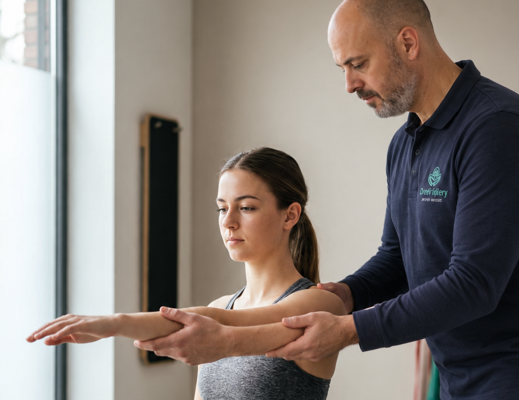
Following a TBI, the body often defaults to abnormal, primitive synergy patterns or severe spasticity. The Bobath concept uses specific handling techniques to break down these uncoordinated reflex movements. By physically guiding the pelvis, spine, and shoulders back into optimal alignment, the therapist alters sensory input to the brain, inhibiting abnormal tightness and facilitating smooth, selective voluntary movement.
2. Proprioceptive Neuromuscular Facilitation (PNF)
TBI survivors frequently lose their sense of limb positioning in space (proprioception). PNF uses multi-joint diagonal and rotational movement sequences to stimulate deep tissue sensory receptors. By applying precise manual resistance along these pathways, PNF helps “awaken” dormant motor pathways, establishing core stability, improving rotational trunk control, and re-establishing coordinated physical transitions.
3. Functional Electrical Stimulation (FES)
When central motor pathways to specific muscle groups are disrupted, FES acts as a technological bridge. By applying localized, timed electrical stimulation to weakened muscles—such as the wrist extensors or the anterior tibialis muscle in the shin—FES forces active muscle contraction during a functional task. This artificial neural input assists in overcoming foot drop or upper limb hemiparesis while providing intense sensory feedback to the recovering brain.
4. Vestibular, Ataxia, and Complex Balance Training
Damage to the cerebellum or vestibular system from a TBI often results in profound dizziness, unsteadiness, or ataxia. Rehabilitation involves highly specific balance training that challenges the visual, somatosensory, and vestibular systems. By systematically retraining weight-shifting, gaze stabilization, and reaction times, patients slowly regain their grounding and learn to safely navigate complex environments.
5. Advanced Motor-Assisted Training (THERA-Trainer tigo)
In cases where a severe brain injury restricts independent standing or walking, early mobilization is vital to combat secondary complications like joint contractures or circulatory drop. Utilizing the THERA-Trainer tigo allows for high-repetition, motor-assisted rhythmic cycling. Whether working passively to alleviate severe tone and spasms, or actively against targeted resistance, this hospital-grade equipment builds systemic endurance, regulates neurological muscle tone, and prepares the musculoskeletal system for upright mobility.
Why the Home Sanctuary Enhances Neuro-Trauma Recovery
For a TBI survivor, the environment plays a monumental role in performance. Busy, brightly lit clinical centers can easily trigger sensory overload, causing rapid cognitive fatigue, irritability, and decreased motor performance.
Transitioning neuro-rehabilitation into the home completely shifts the recovery dynamic. It provides a low-stimulus, high-comfort environment where 100% of the patient’s energy is preserved for physical retraining. Furthermore, it allows the therapist to dissect functional tasks exactly where they happen—adapting a transfer from the patient’s personal bed, mastering stairs within their home layout, or engineering real-world safety strategies. True independence is realized when therapy takes place in the exact environment the patient wishes to conquer.
Clinical Excellence in Brain Injury Neuro-Physiotherapy
Rebuilding physical independence after a traumatic brain injury requires a profound understanding of neuro-anatomy and an intuitive capacity to adapt to a changing clinical picture. Having spent more than 25 years working within elite neuro-trauma and specialized brain injury centers across the UK and Continental Europe, Chartered Physiotherapist Nick Fotakakis (MSc, MCSP) brings a rare tier of clinical mastery directly to your recovery.
Nick’s practice is built exclusively around the intricacies of advanced neuro-physiotherapy. He looks far beyond basic muscle exercises, specializing in the deep re-patterning of the nervous system. By seamlessly synthesizing sophisticated clinical techniques—including NDT Bobath, PNF, FES, and specialized THERA-trainer protocols—Nick constructs immersive, highly individualized rehabilitation programs.
Delivered entirely within the privacy and comfort of your home or care facility, his approach pairs uncompromising hospital-grade clinical standards with a deeply intuitive understanding of the patient’s journey. Partnering with Nick means ensuring that your recovery is guided by two decades of elite specialized expertise, dedicated wholly to restoring your autonomy, dignity, and physical freedom.
Initiate Your Consultation
The path to physical restoration begins with a targeted clinical assessment. Nick invites survivors and their families to discuss their unique neuro-rehabilitation goals.
Contact Nick today to arrange a complimentary 15-minute clinical telephone consultation to evaluate your history and design an uncompromising roadmap for your recovery.
